Saturday, October 26, 2013

6 fantastic activities you can do in Selous Game Reserve.

| |
0 comments
Selous Game Reserve is named after the late Captain Frederick Selous (1851 – 1917) who died in the reserved and buried in it at Beho Beho. He was a professional hunter who managed to shoot a number of animals, especial the dangerous ones such as 31 lions, more than 200 buffalos and elephants. If I were to narrate the story it will take a decade (I exaggerate that, but it will surely take long time). In this case I would recommend a guide book by Olli Marttila “The Great Savanna” The national parks of Tanzania and other key conservation areas. There is a great story about Selous Game Reserve and others.

The welcome comedy

Having said so let see what Selous has to offer. First af all it is one of the largest conservation areas in the in the world covering 50000km2. The environment is both striking and diverse, a mass of labyrinthine watercourse framed by spectacular borassus palms and ever – changing thickets and miombo savanna. Here roams the mightiest population of elephants in East Africa and the biggest population of buffalo to be seen anywhere on the African continent, and the reserve is also the world’s most significant stronghold for highly endangered wild dog. At the same time Selous is one of the last refuges of the browse, or black rhino.

Pick you style!

My current three weeks expedition in the reserve left me in awe; I mean it took my breath away despite the fatigue induced by constant classes we took in the wilderness as students. I learnt the techniques of hunting, preparation of trophies “skinning”, making of biltong and guarding at night to keep hyenas away from the biltong. Quite amusing!
Drying biltong. 

1. Photographic Tourism
The Northern part of the reserve is dedicated to photographic tourism know as tourist blocks. This goes as far as from Mtemere gate to Matambwe gate. Plenty of animals are seen here from greater kudu to the lesser you name them.
National Symbol of Tanzania "a giraffe".

2. Hunting
From the late Frederick Selous to myself and possibly you, there is a good quality quota offered here. All it takes is a license or a permit to hunt in the designated hunting blocks. There a number of hunting operators in the country who will facilitate you to your moment of life changing experience. Although I was in a group of students but it was a magical moment experience. Do you have some guts? “I dare you”. Remember hunting exercise is meant to utilize wildlife sustainably and not the other way round.

Am your professional hunter to be!

3. Camping
It was my first time camping in a large group but still my adrenaline wouldn’t leave me from anxiousness   and little bit of fear. Especially on the first few days, am sure you won’t ask me why on this, will you? Anyway there are lot of camp sites in the reserve to mention a few; Hippos camp, Butembo camp and many others.
 
Game meat barbecue at the camp site. (Linda & Me)


4. Mode of transportation
This is out of ordinary in most cases, especially in Tanzania conservation area. Not only that but some travelers don’t take much notice on the transportation mode they chose for their destination. Well I do and what I find cool here is the variety. In 2008 I came to the reserve by “chemin de fer” (French) meaning the train, and this time by vehicle, other option includes aircraft. And if only Rufiji River had no hippos and crocs I would definitely consider a boat ride.

Am your pilot to be. Inspired by Suzan Mashibe.

5. Walking safari
I had my share when conducting transect walk for animal counting exercise and it surely proved to me that nothing beats the calmness and enchanting wilderness. I encourage you to do this and you can plan it with a tour operator of your choice, simply satisfying.

Walking the transect.

6.  Community services
I know it sounds awkward but impacting positive effect into someone’s life is totally glamorous. It sure is, most especially when it leads to a win - win kind of situation. Poaching is serious and conservation is still mysterious, trying to be helpful by educating the community adjacent to the reserve could reduce the effects. I know there are lodges out there encourage visitors to donate for their outreach programs, but I think it is high time that we should consider community service as tourism activity as well. Setting down and participating in some activities that the local community do is very amusing as you learn new ways of life at the same time impacting knowledge.

Community work by the humanitarian ME with the bucket and other students!

My next safari this weekend is to Tarangire and Manyara National parks stay tune for the sensational report coming afterwards. Thank you and good luck.


Read More

Saturday, August 24, 2013

Singita Grumeti Reserve and the case of the X – poacher.

| |
0 comments
“I will never forget the day I had to cross river Barageti in Serengeti by stepping on hippos back so that I can serve myself from park rangers."

Those are not my words but from an extraordinary x – poacher Mr. Shaban Andrea. He is originally from Mugete village from Bunda district in Mara region of Tanzania. He started poaching in 1980 after completing his primary education the same year. In his own words he claims that he is from a poor family and couldn’t think of anything else to alleviate poverty in the family than poaching.


Mr. Shaban went on by revealing the sad moment of his life during the illegal act of utilizing wildlife resources without permission. He spoke on several times his life was at stake and how he survived. He said sometimes during late 1980’s he went on crossing the border to a national park in Kenya where he nearly got killed for he became a target of bullets for more than two hours nonstop.
From the left Mr. Hans, Centre is Mr. Shaban Andrea and me on the right.

His poaching activities can be categorized into two, where during the 1980s he mainly focused on elephants for ivory and there after changed business to trade other animals like giraffe, Impala and buffaloes  This was due to the rapid diminishing of elephants, he testifies. 

He went on saying that most of time poachers are able to see park rangers earlier than the opposite. He never involved superstition with this illegal act. He used heavy and sophisticated weapons that was supplied by private owners some of them included rifle 458, 375. His place was very popular that his customer had to place order by scrambling. He never mentioned how he managed to get out from various detentions but most of students figured it out, that most probably corruption was behind this.
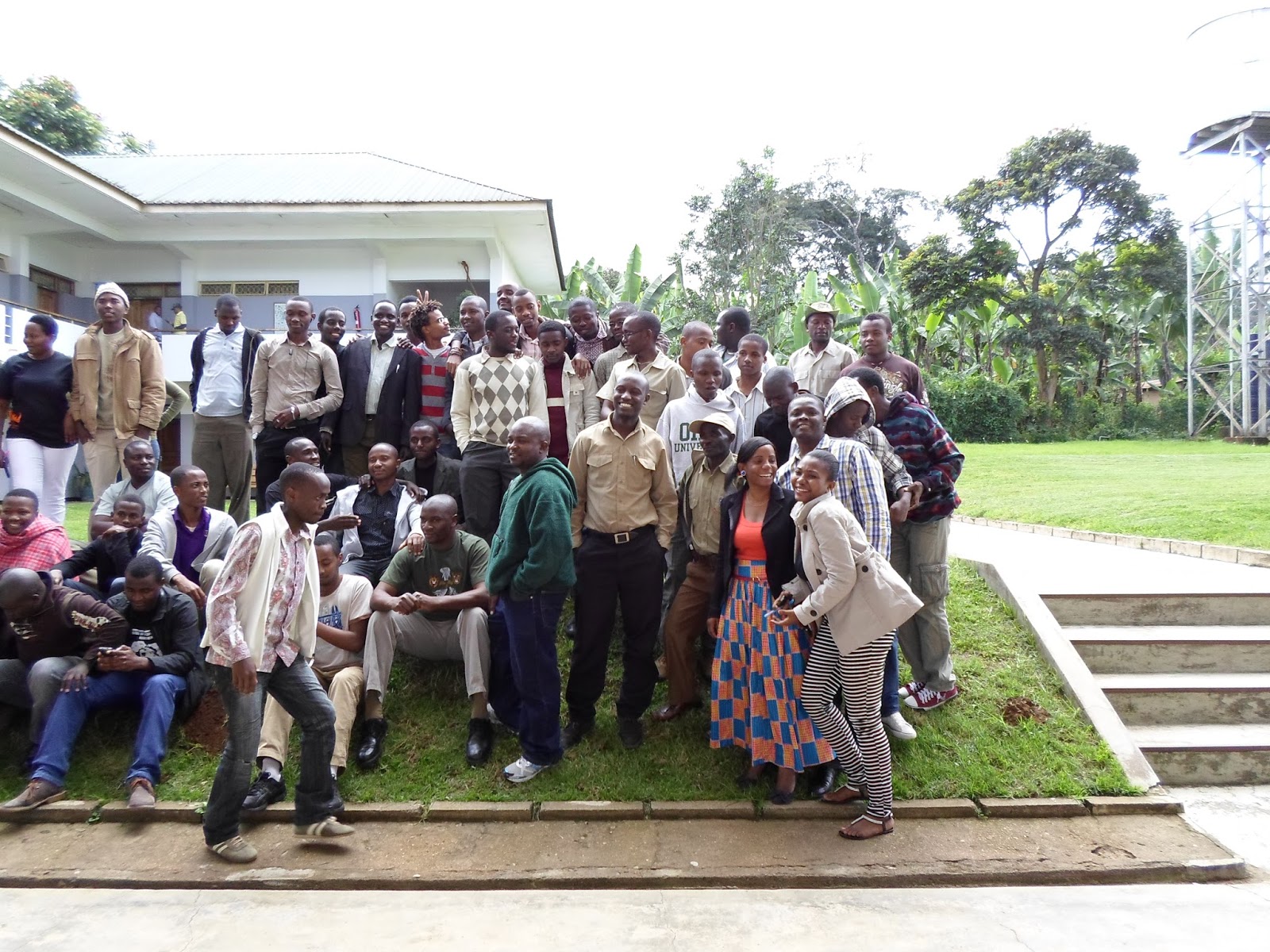
Class of Wildlife Management in CAWM College 2013/2014

Life after poaching.
After several arrests by park rangers, Mr. Shaban thought of ending his dark business. He was good at what he used to do that he attracted attention of the park rangers. He came across Singita Grumeti Reserve Rangers and he joked on his interest to be employed by them. Well he got a job and you can’t believe what he has turned into. Or let just say the rest is history.

He is now an assistance field researcher, as well as community conservation expert. And today I benefited from him as he paid a visit to our class of wildlife management in MWEKA at College of African Wildlife Management.

He continued by saying that today he is a much better man compared to what he used to be. He has three children in various colleges and he believes on the power of community conservation. He has helped some of other poachers to end the illegal business. He is grateful to Singita Grumeti Reserve and their efforts in conservation.

He explains how TANAPA and other stake holders were trying hard to establish community conservation concepts to his village. He said that there are various benefit sharing projects that are conducted in this village like schools and dispensary. 

Read More

Thursday, August 8, 2013

A pictorial guide to Mwanza.

| |
0 comments
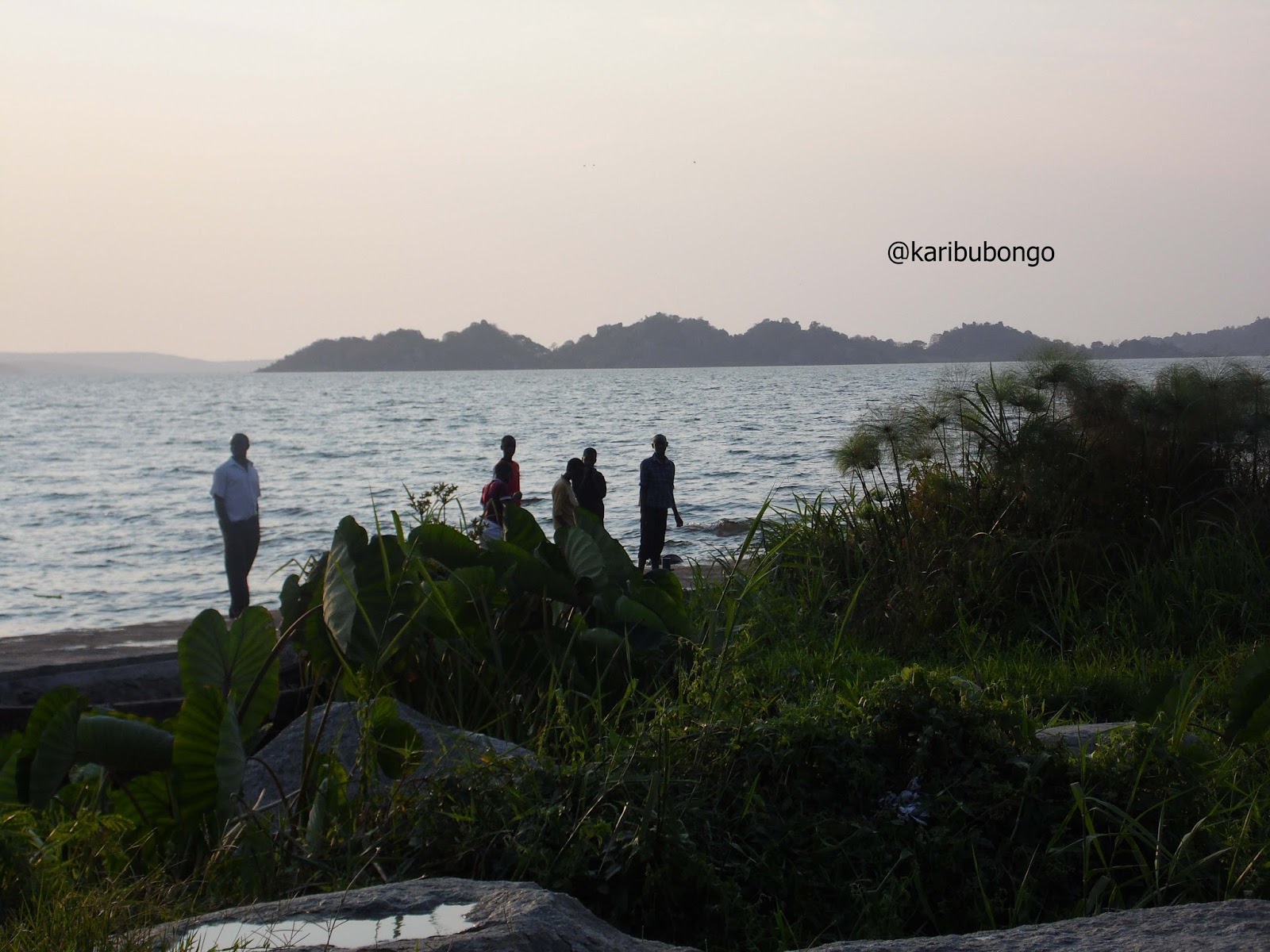
Tanzania is a land of contrast landscape, from the hills of Mount Kilimanjaro to the shores of Indian Ocean. Here is the landscape and natural resources in Mwanza. The rocky hills and Lake Victoria. It is quite a destination that is yet explored in safari or tourism perspective. Mwanza is a home to Rubondo Island National Park and Saanane Island National Park. This is the home of delicious Tilapia and Nile perch not forgetting sardines. Various economic and tourism activities are and can be conducted here. The following pictures will tell you my own perspective of the region, very amazing. Enjoy


Read More

Monday, June 24, 2013

The best African Safari country.

| |
0 comments
Am so excited to write this or to paste this piece of information from The Huffington Post. But before that I want to remind you that earlier this year Tanzania was celebrating the big win after scooping three position among seven, during the Seven Natural Wonders of Africa.
Over 1,000 safari travelers and industry experts participated in the largest survey of its kind to reveal the best safari country of Africa. The results are in and Tanzania came out the clear winner.
SafariBookings.com, an online marketplace for African safari tours, conducted a two-year-long study, gathering reviews from more than 1,000 safari-goers and reputable industry experts to see which African country is best for African safaris. With a score of 4.8 out of 5 stars, Tanzania took the spotlight as the clear winner, beating Botswana by about a tenth of a point. Rounding up the top five were Kenya, Zambia and South Africa.
The study was based on 2,305 reviews from safari travelers and 756 reviews from industry experts, most of whom are reputable guidebook writers working for Lonely Planet, Rough Guides, Frommer's, Bradt and Footprint. Over half of the safari travelers have undertaken multiple safaris and have a good idea about what's offered. This secures the fact Tanzania deserves this top spot.
2013-06-18-TASEmigration080041.jpg
Annual Wildebeest Migration, Serengeti National Park
The key reason that Tanzania was rated the best is because it is home to two of the most famous safari destinations in the world, the Serengeti National Park and the Ngorongoro Crater. Both parks offer stunning scenery and some of the best wildlife viewing in the world. Serengeti National Park is primarily known for the annual migration of over 2.5 million wildebeest and zebra. The Ngorongoro Crater is a popular safari destination, because the wildlife viewing in its immense volcanic caldera is superb throughout the year and sightings of game species such as lion, hippo and rhino are almost guaranteed.
While the Serengeti and Ngorongoro are located in the Tanzania's northern circuit, there are equally impressive safari parks in the country's western and southern circuits. In the less visited western circuit are Gombe and Mahale Mountains national parks, both excellent parks to see chimpanzees. Katavi National Park is known for its abundance of large mammals such as hippos and buffalos.
2013-06-18-Tanzania12110609.jpg
Chimpanzee, Mahale Mountains National Park
In the southern circuit, there is Ruaha National Park and Mikumi National Park, where safari travelers are sure to see large predators. Finally, there is Selous Game Reserve, one of the largest protected areas in the world. It features boat safaris where sightings of crocodiles and hippos are common.
The study broke down the best time to visit Tanzania by "monthly user ratings." Overall, every month of the year received above four stars in terms of an excellent travel month. This came as a surprise. The afternoon rains (which are typical for the wet season) seldom interfere with a safari, so that reason wouldn't be suspect for a low rating, but wildlife viewing in the southern and western parks is not as rewarding during the wet season. On the other hand, most northern parks offer excellent wildlife viewing year-round.
For the full report, including the ratings of the other safari countries and Tanzania's major parks, please visit http://www.safaribookings.com/blog/2/
Photographs by Ariadne van Zandbergen / Africaimagelibrary.com
Read More

Thursday, June 20, 2013

My trip to Dar es Salaam.

| |
0 comments

It all began with high expectations as I took my flight from Mwanza to the cosmopolitan rhythm city. Am optimistic by nature and you can call me Mr. High expectations. My flight was not enjoyable, I tried the famous new Airline in Tanzania that claims the cheapest. I had issues with the baggage payment. It was an offal experience being the new bee to the airline, I was left stressful and my heart jumping like a popcorn in a fryer. The system has lot of loop holes for tips (softening the unpleasant word “corruption”) you know what I mean.

I was super welcomed with a dramatic transport after landing. I chose the public transport from Airport to Gongo la mboto I have forgotten how it can be with public transport. Since I arrived in the late morning I presumed it will be well but not. Later on I paid a visit to my auntie in Vingunguti the return to my former destination in the evening became tremendous hard. Imagine I had to board a lorry for transport, fun enough I had to straggle hard for it. In spite of all the hardship, the craziest and most enjoyable thing was when we were mocked by other passengers from other Lorries heading opposite direction. Whenever we came across these groups of passengers there was a lot of shouting and commotions and we were asked where we buried our loved one or from which sleep out (kigodoro) we were from. Very interesting the charge is also high. You real can’t claim being in Dar es salaam without tasting what the local goes through in the daily basis.

In Dar es Salaam two minute lateness can mess up your entire day, if you have an appointment you ought to wake up as early as the first cook crows. Here is when I remember a past issue from Mwananchi newspaper that goes by "Dar es salaam residents are in danger of turning into Zombies due to lack of enough sleep caused by transport hardship. I lost some few ponds because of this and I guess at least this is a positive perspective.

Let’s see what Dar es Salaam had to offer this time. It is like I have been everywhere for every occasion, from an invitation to a wedding party to a funeral, to former college, to every possible relative out there and to Morogoro. I want to just emphasizing the rhythm of the city, colorful people that are hospitable to anyone. Do you still remember the festivals that are coming up ahead? Do you know that Ramadan is right at hand? Well it is and am planning to cover it like no one has ever done before. And why the reminder, it’s because most Muslims are trying hard to get married now so that they can have the pleasure to have someone prepare the mouth watering futari. I can’t wait for the season!

This time I didn’t go to any fancy place in town, I was kind of uswazi (a normal street guy) explorer. And now you can feast your eyes with these unprofessional photos from your amateur photographer who uses a phone to capture the moment as they happen.

Julius Nyerere International Airport in Dar es Salaam

A street in Vingunguti 

Fetching water


A woman in celebration in a local bar

A piece of Art (an earring made of  a beer cap)

At a  barber shop to be updated about what's on the street.

A mini safari to Morogoro.
funeral

A Muslim wedding match (as we draw close to Ramadan) 

people as they wait for  unpredictable transport.

Am back in Mwanza 
Have you ever been in Dar es Salaam? what was your experience? I would love to hear from you as you comment. See you afterwards!

Read More

Friday, June 14, 2013

Morogoro: The calmness at the foot of Uluguru Mountains.

| |
0 comments
Do you know the Eastern Arch Mountain Range? If you don't, here is the remainder. Today I'll take you to "Mji kasoro bahari" a city without an ocean. Am talking about Morogoro, a town located at the slopes of Uluguru mountains among the Eastern Arch Mountain Range. I have been at this place for a short business endeavor but I come to love the calmness of this town.

This time I will let the photos talk to you although they are not the best shoot, I hope you'll bear with me. WATCH-OUT! a new surprise coming your way, just in-case you want to know what was this meeting all about. That is reserved for next time but about the hotel I won't be stingy! The hotel you see in the photos is Morogoro Hotel, the best thing I like about it is the magical view of the Uluguru mountains and the calm surroundings. I believe those how love to meditate this hotel is just the place to be.

Busy roads (clean and calm)

Arawa on a motorbike


Ukombozi (Freedom) keep left

Looks like nobody exists 


Simply clean


A welcome avenue

Restaurant


Note the mountains

The way down to the garden


A little bit of water party


Note the Sun bursting the mountains

Arawa and Mr. Bhavesh Jani

One of those buildings

Simply townish

busy bus station

People in the making
That's all for the day I hope you learnt at least a thing and enjoyed what Morogoro has to offer.

Read More
Karibu Bongo (c) 2013. Powered by Blogger.